Containers
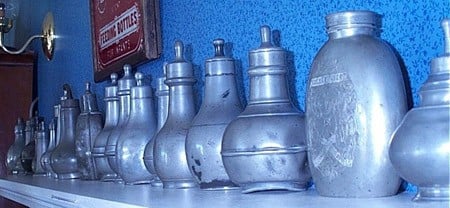
used in the nursing of infants are among the oldest of vessels; pottery nursers have been found that were used as early as 1500
B.C. Such feeding devices have also come from the excavation of Greek and Roman
graves. Until the 1800s baby-feeding devices were made of a variety of
materials including stone, metal, wood, and pottery (the Indians of
Not all
baby-feeding devices were made to accommodate milk. Throughout the years a soft
gruel-like substance called pap was fed to small babies. Pap was made of a
number of things including ground cornmeal and water with crushed walnuts
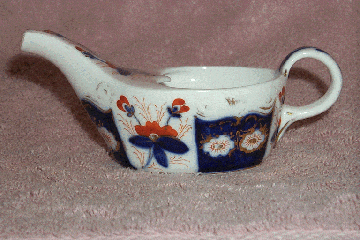
added. Containers from which pap was dispensed include hollow spoons and
boat-shaped vessels with hollow handles through which the pap was blown into
the baby's mouth. Other pap feeders were made in a modified teapot shape of
metal or ceramic.
In
In 1864 the
idea of a glass tube stuck through a cork that fit into the neck of a glass
bottle was brought to
Although that
first rubber nipple was patented by Elijah Pratt of
In the late
1800's a large variety of glass nursing bottles were produced in the
By the end of
World War II the
Unusual shapes
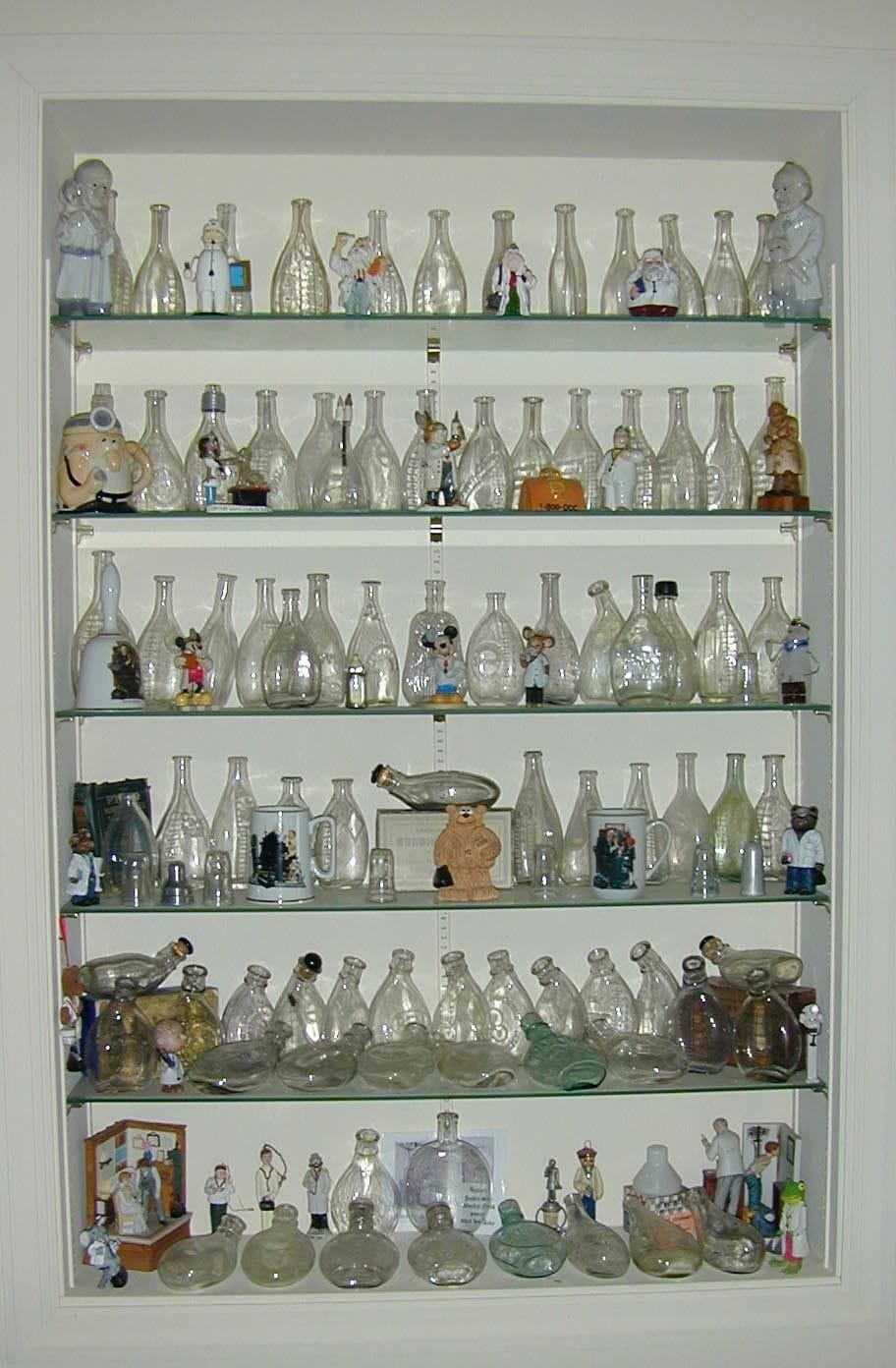
and embossments are the predominant characteristics of glass nursing bottles.
Some of the most interesting include specimens shaped like a baby's head, a
papoose strapped to the back of its Indian mother, and a baby's shoe. But nonfigural shapes are just as interesting and unusual.
Nursing bottles can be found in a variety of bladder shapes with curved necks;
others are oval, cylindrical, bulbous, and rectangular. Embossments include
lettered brand names and slogans such as "FEED THE BABY" and
"BABY'S DELIGHT." Other embossments feature brand designs or pictures
of crying babies, animals, fairy-tale characters, and toys.


Most of these
containers were made in clear glass or the common aqua or light green glass.
Some, however, may be located in varying shades of purple, caused by exposure
to the ultraviolet rays of the sun.
Closures on
nursing bottles commonly are the standard cork type or feature a ring of glass
over which a rubber nipple is stretched. The closing devices themselves are
very interesting. If only the cork and tube types are considered there is quite
a variety. Nipples, too, were and still are produced in a variety of shapes.
Co-related
items in a nursing bottle collection could include the bottle closing devices
and nipples mentioned above. A selection of breast pumps would certainly fit
into a nursing bottle collection. The pumps enabled mothers to obtain and store
for later use the needed amounts of milk. Nipple shields, also, could be
considered an integral part of the nursing bottle collection; these shields
were also popular just before the turn of the century. Nipple shields were
usually a glass cuplike device, which fit on the mother's breast. From the cup
a tube led to a rubber nipple. Though not in direct physical contact with the
mother, the baby was able to obtain milk directly from the breast through the
nipple shield; such shields were helpful in nursing the teething babies. Of
course, teething rings, toys, and other baby items could also be included in
the nursing bottle collection.
Although
bottle collectors have only recently become interested in nursing bottles,
doctors and museums have availed themselves of these containers for years. The
early pap spoons and feeders, and vessels of metal and organic materials, are
to be found mostly in the few sophisticated private collections and museums.
However, today's nursing bottle collector can rely on the fact that as interest
grows, more of all types will be discovered and put on
the market
This Page Last Updated By Ed Bogucki
on 9/12/07
Questions or comments
about this website? Please mail them to eiboguckimd@comcast.net
Copyright
© 2001- 2007. All rights reserved.